
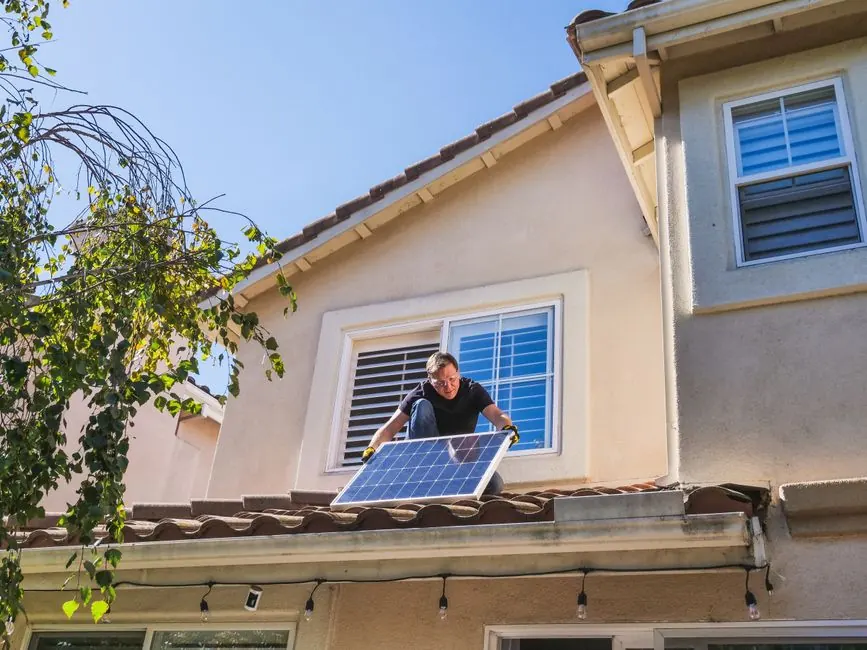
You can inspect your roof safely from the ground by walking the perimeter of your home with binoculars, checking the roof slope, ridge, valleys, and all penetrations for visible damage, and then looking for interior warning signs like ceiling stains or attic moisture. That is the entire method. No ladder, no harness, no risk of a fall from 20 feet. This guide walks you through the exact steps, what to look for in a California climate, and when a ground-level roof inspection is no longer enough.
We are RoofPros California, and we have walked thousands of roofs across the San Fernando Valley and Los Angeles County. Most of the damage we repair started as something a homeowner could have spotted from their own driveway months earlier. Here is how to do that inspection yourself, safely.
Why Ground-Level Roof Inspections Matter in California
Ground-level roof inspections matter in California because our climate attacks roofs differently than most of the country. We do not get heavy snow loads, but we do get intense UV radiation, 100-plus-degree summer afternoons, Santa Ana winds, and a rainy season that dumps months of precipitation in a handful of storms. Each of those stresses a roof in a specific way, and each leaves a signature you can see from the ground.
UV exposure is the biggest silent killer of California roofs. Asphalt shingles here typically last 18 to 22 years instead of the 25 to 30 years quoted in milder climates, because the sun bakes the volatiles out of the asphalt. That shows up as curling, cracking, and granule loss long before a leak appears inside your house.
Then there is the rainy season. In Southern California, the first big storm after a dry summer is when most leaks reveal themselves. Water finds every cracked flashing, every lifted shingle, every failed sealant. If you have not looked at your roof since spring, the first rain in November is a bad time to discover a problem.
A ground-level inspection takes 15 to 20 minutes. A professional Roof Inspection in California takes longer and covers more, but the DIY version catches the obvious stuff between professional visits. That is exactly what it is for.
How to Inspect Your Roof Safely From the Ground in California
How to inspect your roof safely from the ground in California comes down to four tools and a systematic walk. You need binoculars (8x42 or better), a phone or notebook, a flashlight for the attic, and about 20 minutes. Do the exterior walk first, then go inside.
Step 1: Walk the perimeter slowly
Start at the front of the house and walk the full perimeter, stopping every 10 to 15 feet to scan a new section of roof. Do not rush this. Most missed damage is missed because the homeowner walked too fast or only checked the side of the roof they can see from the kitchen window.
Look at the roof line against the sky. A straight ridge should look straight. A sagging ridge line or a wavy roof plane means something underneath has moved, rotted, or failed.
Step 2: Scan with binoculars
Use the binoculars to zoom in on the ridge cap, the valleys, the chimney, the vents, and the edges. You are looking for anything that breaks the pattern: missing shingles, lifted edges, dark streaks, rust, or exposed nail heads.
Pay special attention to the south- and west-facing slopes. Those take the most sun in California and age fastest.
Step 3: Check the attic
Go inside and look at the underside of the roof deck. With a flashlight, check the rafters, the sheathing, and the insulation for water stains, dark streaks, or white chalky residue (efflorescence, which means moisture is moving through). Look for daylight coming through the roof boards. Any of those signs means water is getting in somewhere.
Step 4: Check interior ceilings and walls
Walk every room and look at the ceiling, especially near exterior walls, chimneys, and skylights. A faint brown ring or a bubbling paint patch is a leak signature. It might be old, or it might be active. Either way, note it and check again after the next rain.
If you find something you cannot identify, our team handles Roof Leak Repair in California and can trace the source without tearing apart your ceiling.
Ground-Level Roof Inspection Checklist for California Homes
A ground-level roof inspection checklist for California homes should cover these items every time. Print it or save it in your phone notes.
- Ridge line: straight, no sagging, ridge cap intact
- Shingles: no curling, cracking, missing tabs, or bald spots
- Granules: check gutters and downspouts for accumulated grit
- Flashing: chimney, vents, and wall junctions tight and rust-free
- Valleys: clear of debris, no visible rust or separation
- Penetrations: pipe boots, satellite mounts, and skylights sealed
- Gutters: attached, not sagging, no rust streaks on fascia
- Fascia and soffit: no rot, peeling paint, or water stains
- Attic: no daylight, stains, or damp insulation
- Interior ceilings: no rings, bubbles, or discoloration
If you see three or more items on this list, you are past the DIY stage. That is when a professional Roof Maintenance in California visit pays for itself, because small fixes in October cost far less than emergency repairs in January.
What to Look For When Inspecting Roof From Ground in California
What to look for when inspecting roof from ground in California is different from what you would look for in Minnesota or Florida. Here are the specific signals that matter most in our climate.
Curling and cracking shingles
When shingle edges curl upward like a potato chip, the asphalt has lost its flexibility. This is UV damage, and it is the number one reason California roofs fail early. Once curling starts, the shingle is no longer waterproof. You will see it first on south- and west-facing slopes.
Granule loss in gutters
Run your hand along the bottom of a gutter after a dry spell. If it feels like coarse sand, those are granules that used to be on your shingles. Some loss is normal. Heavy accumulation means the shingles are near the end of their life.
Rust on flashing and vents
California's coastal air and inland temperature swings both corrode metal. Rusty flashing around a chimney or vent pipe is a leak waiting to happen. Once the metal is compromised, water gets behind it and into the roof deck.
Dark streaks and stains
Black streaks on a roof are usually algae, which is cosmetic. But brown or gray streaks that follow a specific line, like down a valley or around a chimney, are water paths. Those are the ones to investigate.
Lifted or missing shingles after wind
Santa Ana winds regularly hit 40 to 60 mph in the San Fernando Valley and can tear shingles loose in a single night. After any wind event, walk the perimeter and look for shingles in the yard or gaps on the roof plane.
We see this constantly in the older neighborhoods, especially with Roofing in North Hollywood where 1940s and 1950s homes still carry their original roof structures under newer shingle layers. Those homes need more frequent inspection because the decking underneath has already been through decades of heat cycling.
Common Mistakes Homeowners Make
The biggest mistake homeowners make is climbing onto the roof to get a better look. According to the CDC, falls are the leading cause of home injury deaths in the United States, and roof work is one of the most common scenarios. A 15-minute ground inspection gives you 80 percent of the information with zero risk.
Other mistakes we see regularly:
- Only checking one side of the roof. The side you can see from the driveway is rarely the side with the problem.
- Ignoring the attic. Interior signs show up before exterior ones in many cases.
- Waiting until it rains. By then, water has already entered the structure.
- Pressure washing the roof. This strips granules and voids shingle warranties. Never do it.
- Walking on the roof in soft-soled shoes. Even if you do go up, this damages shingles in hot weather.
- Assuming a new roof needs no inspection. New roofs fail too, usually at flashing and penetrations.
If you have already made one of these mistakes and are not sure what you are looking at, that is a normal call for us. We would rather look at it now than fix a rotted deck later.
When to Call a Professional Roofer in California
Call a professional roofer in California when you see active water intrusion, when your roof is over 15 years old and showing multiple problem signs, or when you cannot safely identify what you are looking at from the ground. Those are the three triggers.
Specifically, call us if:
- You see water stains on interior ceilings or walls
- Shingles are missing across more than a few square feet
- Flashing is rusted through or pulling away
- The roof is sagging anywhere along the ridge or eaves
- You have had three or more leaks in the past two years
- Your roof is 20 years or older and has never been professionally inspected
At RoofPros California, we inspect roofs across Los Angeles County and give you a straight answer about what we find. If it is a $400 flashing repair, we will tell you that. If it is time for a Roof Replacement in California, we will show you why with photos from your own roof.
We also serve the neighborhoods where roof age and climate stress combine worst, including Roofing in Canoga Park, where summer temperatures regularly hit 105 degrees and shingle life runs shorter than the county average.
Frequently Asked Questions
How do I inspect my roof from the ground in California?
Walk the full perimeter of your home with binoculars, scanning the ridge, slopes, valleys, flashing, and penetrations for damage. Then check your attic and interior ceilings for water stains. The whole process takes 15 to 20 minutes and requires no ladder.
What should I look for in a roof inspection from the ground in California?
Look for curled or missing shingles, granule buildup in gutters, rusted flashing, dark water streaks, sagging ridge lines, and any interior ceiling stains. In California, UV damage and wind-lifted shingles are the two most common issues you will spot.
Is it safe to inspect my own roof in California?
Yes, from the ground it is completely safe. Do not climb onto the roof. Falls are the leading cause of home injury deaths, and a ground-level inspection with binoculars catches most visible problems without any risk.
How often should you inspect your roof in California?
Inspect your roof from the ground twice a year, in spring and again in early fall before the rainy season. Add an extra check after any Santa Ana wind event or major storm. Roofs over 15 years old benefit from an annual professional inspection as well.
Can a ground inspection find a roof leak?
It can find the visible signs of a leak, like stains, rusted flashing, or damaged shingles, but it cannot always pinpoint the source. Water travels along rafters before it shows up inside. If you see interior stains, a professional leak inspection is the fastest way to find the entry point.
Get Help With Roofing in California
If your ground-level inspection turned up something you are not sure about, we will come out, get on the roof safely with the right equipment, and tell you exactly what is going on. No guesswork, no pressure.
Call RoofPros California at (877) 409-4846 to schedule your roof inspection. We serve homeowners across Los Angeles County and the San Fernando Valley, and we will give you a clear answer the same day.