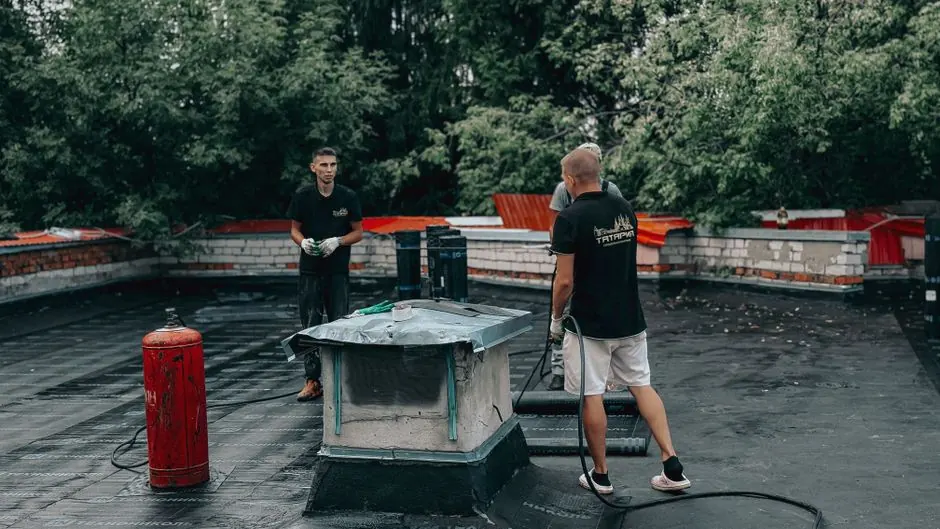
Full roof inspection
We walk the deck, check slope, probe for soft spots, and take moisture readings in the insulation. You get photos and a written report before any material is ordered, so the scope is based on what your roof actually needs.
Every flat roof job is different, so we scope it after the inspection. These are the items that come standard on a full membrane installation, and the ones we price separately so you can see exactly where your money goes.
We walk the deck, check slope, probe for soft spots, and take moisture readings in the insulation. You get photos and a written report before any material is ordered, so the scope is based on what your roof actually needs.
On replacement jobs we remove the old membrane, haul it off, and dispose of it properly. If the existing system is a single dry layer, we will tell you when a recover saves money instead of pushing a full tear-off you do not need.
Rotted sheathing gets replaced, then we install polyiso insulation and a cover board to meet California Building Code (CBC) requirements. This is also where we correct low spots that cause flat roof ponding.
TPO, EPDM or modified bitumen goes down with welded or adhered seams, and every wall, curb, vent and drain gets new flashing run at least 8 inches up. Edge metal and drip edge are replaced, not reused.
We flood-test or hose-test the finished roof and check the interior for stains. Magnets sweep for nails, and we haul away all debris. You get warranty paperwork and a maintenance schedule before we leave.
Flat Roofing in California is the design, installation and repair of low-slope roof systems that shed water through pitch and drainage rather than gravity-fed shingle overlap. Most California flat roofs use a single-ply membrane such as TPO or EPDM, or a modified bitumen cap sheet over a base ply. The layers matter: roof underlayment, insulation board, flashing at every penetration, and a membrane that is heat-welded or adhered so seams stay sealed through years of UV exposure.
California flat roofing gets punished by the climate. Inland valleys push past 100 degrees in summer, coastal fog keeps surfaces damp, and winter storms dump water fast. Add clogged gutters, flat roof ponding and sun damage, and small issues turn into roof rot. That is why we recommend a flat roof repair California inspection at the first sign of bubbling, and why commercial flat roofing California clients schedule maintenance twice a year instead of waiting for a ceiling stain.
Every job follows the same five steps, whether it is a 400-square-foot garage in Burbank or a 20,000-square-foot commercial building in South Gate. You know what happens next and who is on your roof.
Schedule
Call or book online — a real human picks up and confirms a 2-hour arrival window.
Diagnose
Licensed tech inspects on-site, then walks you through the cause and your options.
Fix
The job is completed to code and done right the first time — no shortcuts, no surprises.
Guarantee
Every job backed by a written workmanship warranty — and we stand behind it.
 Tools & Equipment
Roofing safety harness and ladder stabilizer
Every crew member is tied off on low-slope work, and stabilizers keep ladders from kicking out on stucco and siding. It is not optional on a two-story California home.
Moisture meter and infrared camera
We read moisture in the insulation board before quoting a recover. If the deck is wet, a recover traps that water and the new membrane blisters within a year.
Hot-air welder for TPO
Seams are welded, not glued, on TPO systems. We test every weld with a probe and pull test so the seam strength matches the membrane itself.
Caulking gun and roofing sealant
Used at termination bars, counterflashing and small details where a welded seam is not possible. We use manufacturer-approved sealants so the warranty stays intact.
Nail magnet and pry bar
The magnet sweeps the lawn and driveway after tear-off so nobody finds a roofing nail with a tire. The pry bar handles edge metal and flashing removal without tearing good material.
Chalk line and utility knife
Lap lines get marked before membrane goes down, and clean cuts matter at every penetration. Sloppy cuts are where leaks start two years later.
California Building Code (CBC) and Title 24 compliance
We size insulation R-values and choose cool-roof membrane colors to meet the code for your climate zone. On additions and commercial buildings, that documentation matters at final inspection, and we provide it.
Manufacturer system warranties
As a GAF Master Elite and Owens Corning Preferred Contractor, we can register system warranties that cover both membrane and workmanship. The warranty only holds if the assembly is installed to spec, which is why we do not cut corners on fasteners or flashing height.
Water testing before closeout
We flood-test or hose-test the field and every penetration before we call a job done. If water shows up inside, we fix it then, not after you find the stain.
Twice-a-year maintenance schedule
Flat roofs need drains cleared and seams checked twice a year in California. We set the schedule at handoff and send reminders, which keeps small issues from turning into insulation replacement.
01
What we do: We inspect the deck, find the wet insulation around the drain, and do a proper flat roof repair California style: cut out the failed membrane, replace the saturated board, rebuild the drain collar, and weld in new TPO.
→ The garage stays dry through the next storm cycle, and the repair carries a written workmanship warranty instead of a handshake.
02
What we do: We phase the tear-off over two weekends so the business stays open, install tapered insulation to fix ponding, and set a new Firestone TPO assembly with manufacturer-backed warranty.
→ The building passes inspection, the roof drains in minutes, and the owner gets a 20-year system warranty on file.
03
What we do: We remove the old cap sheet, add a cover board for puncture resistance, install a walkable TPO membrane, and flash the new deck posts and door thresholds.
→ The deck goes in without punching holes in the roof, and the new membrane handles both weather and regular foot traffic.
04
What we do: Our 24/7 crew tarped and sealed the roof the same night, then returned Monday to trace the leak to a failed HVAC curb and complete the permanent repair.
→ No lost business days, no water damage to the dining room ceiling, and the repair was finished before the next storm.
California flat roofs live in two climates at once. Inland, summer surface temps push past 150 degrees and cook modified bitumen until it blisters. On the coast, fog keeps the membrane damp and algae grows in shaded seams. Winter storms drop a season's rain in a few days, and if the drains are clogged, that water sits. We see this in older Los Angeles-area homes with original 1970s cap sheet, in Bay Area commercial buildings with aging EPDM, and in High Desert properties where UV destroys anything not rated for it. Our crews carry TPO, EPDM and modified bitumen on the truck so we can match the system to the building instead of forcing one material on every roof. If you are comparing flat roof installation cost in California across bids, ask each contractor what they do about ponding and how they test seams. That answer tells you more than the price.
North Hollywood
Lots of older single-story homes with flat roofs over garages and additions. Many have two layers of cap sheet, which means tear-off before a new membrane.
Sherman Oaks
Hillside properties where flat roofs tie into steep shingle sections. Transition flashing is the detail that decides whether those roofs leak.
South Gate
Dense commercial and light-industrial buildings with large low-slope roofs. Ponding and drain maintenance are the recurring issues here.
Fremont
Bay Area fog keeps flat roofs damp longer, so we pay extra attention to seams, termination bars and any organic growth in shaded areas.
Inland summer heat above 100 degrees
UV breaks down modified bitumen and dries out sealant at flashing. We spec reflective TPO and UV-rated sealants on inland jobs, and we check flashing height because heat cycling pulls it loose.
Coastal fog and marine layer
Constant damp promotes algae and keeps the membrane from fully drying. We inspect seams more often on coastal roofs and use EPDM where fog and salt air are the main stressors.
Winter storm bursts
A single storm can drop several inches of rain in hours. If drains and scuppers are clear, the roof handles it. If not, water ponds and finds every weak seam, which is why we test drainage on every job.
Title 24 Energy Code requirements
Cool-roof ratings and insulation R-values are code, not upgrades, on permitted work. We document the assembly so your final inspection does not stall on the roof.
Flat roofs fail in predictable ways, and most of them trace back to water that never drained. Here are the calls we get most often and how we handle them.
Problem
Ponding water works its way into seams and penetrations, saturates the insulation board, and eventually rots the deck. It also voids most manufacturer warranties, which means a leak later comes out of your pocket.
Our Fix
We map the low spots, then build up crickets and saddles with tapered insulation before the new membrane goes down. Drain collars and scuppers get reset to the correct height so water actually leaves the roof instead of circling it.
Problem
Bubbles mean the membrane has lost its bond to the layer below, usually from trapped moisture or a bad weld. Left alone, the blister tears open in the next Santa Ana wind event and lets water straight into the assembly.
Our Fix
We cut out the failed section, dry the substrate, and splice in new membrane with proper lap dimensions and welded seams. If blisters cover more than a quarter of the roof, we price a full replacement instead of chasing them one by one.
Problem
Penetrations are where most flat roof leaks start. Cracked flashing or failed sealant around a plumbing vent or HVAC curb lets water in slowly, and you find out when the ceiling stain shows up weeks later.
Our Fix
We rebuild each penetration with new flashing, primer and roof sealant, then water-test every one. On commercial flat roofing California buildings, we also add walkway pads so service techs stop stepping on the same seams every year.
Problem
Debris in a scupper or drain turns a working flat roof into a swimming pool in one storm. The weight stresses the deck, and the standing water finds every weak seam you have.
Our Fix
We clear and test every drain, then set you up on a twice-a-year maintenance schedule. It is the cheapest insurance you can buy on a flat roof, and it takes our crew less than an hour on most homes.
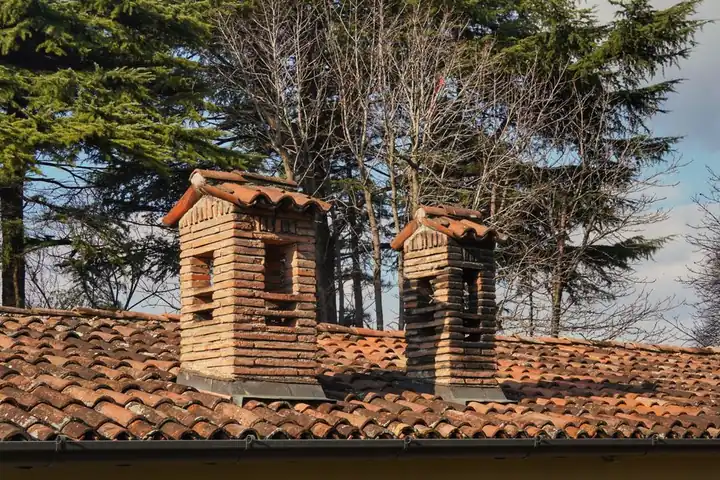
Low-slope roofs cover a huge share of California homes, garages, additions and commercial buildings. When the membrane is installed correctly, you get a roof that drains, holds up to UV, and stays walkable for service calls.
Drainage that actually works
We check slope, add crickets and saddles where water stalls, and clear the path to scuppers and drains. A properly pitched flat roof installation California crews build will move storm water off the deck in minutes instead of letting it sit for days and soak into the insulation board.
Membrane built for UV
White TPO reflects heat and keeps attic temperatures down, which helps with Title 24 Energy Code compliance on additions. EPDM handles sun and ozone without cracking. Both beat a failing modified bitumen cap that has already blistered and lost its granules after a decade of California summers.
Fewer leaks at penetrations
Most flat roof leaks start at vents, HVAC curbs, skylights and drain collars, not in the field of the membrane. We rebuild those details with new flashing, primer and sealant, then water-test before we close out. That is the difference between a patch and a repair that holds.
Walkable, serviceable deck
A sound membrane lets your HVAC tech, solar crew or plumber get on the roof without punching holes. We mark traffic paths and add walkway pads where people step. It costs a little more up front and saves a repair call every time somebody services the equipment.
Typical 2026 pricing for flat roof work in California runs $6 to $12 per square foot installed for a full membrane replacement, and $450 to $1,400 for a single leak repair. Commercial flat roofing California projects price higher because of insulation thickness, code-required R-values and access equipment. We quote after the inspection, in writing, with the repair and replacement options both listed so you can see the trade-off. No pressure, no mystery line items.
Typical Investment Range
$450 - $1,400 for repairs; $9,000 - $18,000 for a typical 1,500 sq ft replacement
The cheap bid usually skips moisture testing, reuses flashing or leaves the ponding in place. We price the work that makes the roof last, and we back it with manufacturer-backed warranties you can actually file a claim on.
What changes the price
Roof size and access
A 400-square-foot garage is a one-day job. A 20,000-square-foot commercial roof needs hoists, phased tear-off and more labor hours. Steep ladder access or tight side yards add time on every trip up.
Number of existing layers
One dry layer may allow a recover, which saves disposal cost. Two or more layers mean tear-off, dumpster fees and more labor. Tear-off on a typical home runs one to two extra days.
Deck and insulation condition
If moisture readings show saturated insulation, it has to come out and be replaced. Rotted sheathing gets swapped for new plywood. This is the single biggest variable between a low quote and a real one.
Membrane type
TPO and EPDM sit in the middle of the range. Modified bitumen is often cheaper up front but shorter-lived in inland heat. Reflective cool-roof membranes may cost slightly more and help with Title 24 compliance.
Drainage corrections
Adding crickets, saddles or tapered insulation to fix ponding adds material and labor. Skipping it is cheaper today and expensive later, because ponding is what kills flat roofs early.
Penetrations and flashing
Every vent, HVAC curb, skylight and drain collar needs new flashing. A roof with a dozen penetrations takes longer than a clean field, and the flashing is where the leak risk lives.
Google ★★★★★4.9
They found the actual leak at the HVAC curb after two other companies patched the wrong spot. Tarped it same day, repaired it that week. Fair price and they cleaned up every nail.
Yelp ★★★★★4.8
Replaced our garage flat roof with TPO and fixed the ponding with tapered insulation. The crew explained each step and sent photos of the finished work. No leaks through two winters.
BBB ★★★★★4.9
We use them for maintenance on three commercial buildings. Drains cleared twice a year, seams checked, and they flag small issues before they turn into big invoices. Reliable scheduling.
Our California flat roofing crews run routes across Los Angeles County, the Bay Area, the Inland Empire and the High Desert, so a flat roof installation California property owners need does not depend on which side of the state you live on. Same materials, same inspection standard, same warranty paperwork.
Older homes with flat roofs over garages and additions are common here. We handle tear-offs of multiple cap sheet layers and rebuild drain details.
Hillside properties where flat roofs meet steep shingle sections. Transition flashing and drainage corrections are the focus on most jobs here.
Plenty of mid-century homes with low-slope roofs. We fix ponding with tapered insulation and install TPO that handles valley heat.
Bay-adjacent properties where fog and damp keep flat roofs wet longer. We spec EPDM and check seams and termination bars closely.
High Desert UV destroys modified bitumen fast. We install reflective TPO and UV-rated flashing to survive the summer heat.
Mix of residential and commercial flat roofs. We handle membrane replacement, drain maintenance and Title 24 compliant insulation upgrades.
Smaller foothill homes with flat roof sections. We repair leaks at vents and skylights and replace aging cap sheet with new membrane.
Bay Area buildings with aging EPDM and ponding issues. We re-weld seams, reset drains and install new single-ply systems.
Hot inland summers and winter storms. We build roofs that drain fast and hold up to UV, with insulation sized to code.
Commercial and residential flat roofs, including restaurant buildings with HVAC curbs. We handle emergency leaks and full membrane replacement.
Dense commercial and industrial buildings with large low-slope roofs. Ponding corrections and drain maintenance are routine here.
Coastal-adjacent homes and small commercial buildings. We repair seam failures and install walkable membranes where service traffic is heavy.
Orange County properties with flat roofs over additions and patios. We flash transitions and correct drainage before installing new membrane.
Salt air and marine layer stress flat roofs here. We check flashing and seams closely and use materials rated for coastal conditions.
Older homes and commercial buildings with multi-layer flat roofs. We tear off to the deck, replace rot and install a warranted system.
Real answers to the questions we hear most often from local homeowners and property managers.
New flat roof installation in California starts with the deck, not the membrane. We build slope, set insulation and flash every penetration so the system drains from day one instead of pooling at the low corner.
View Roof InstallationWhen a flat roof has two or more layers or widespread wet insulation, replacement beats repair. We tear off to the deck, replace damaged sheathing, and install a new warranted membrane assembly.
View Roof ReplacementBlistered seams, cracked flashing and punctures from foot traffic are routine flat roof repairs. We cut out the failure, dry the area, and splice in new membrane rather than coating over a problem that will return.
View Roof RepairFlat roof leaks rarely start where the stain shows on your ceiling. We trace water back to the actual entry point, often a drain collar or HVAC curb, then repair and water-test before closing out.
View Roof Leak RepairA flat roof inspection covers membrane condition, seam integrity, drainage, flashing height and moisture readings in the insulation. You get photos and a plain-language report, not a sales pitch.
View Roof InspectionTwice-a-year maintenance keeps flat roofs alive in California. We clear drains and scuppers, check seams and flashing, remove debris, and catch small failures before they soak the insulation board.
View Roof MaintenanceCall (877) 409-4846 or send us a message and we will schedule a free inspection at your property. Same-day estimates are common if you reach us before noon. Emergency leak calls are answered 24 hours a day, every day of the year.
Phone
(877) 409-4846Address
California
Hours
Mon–Fri: 7AM – 7PM
Sat: 8AM – 4PM
Sun: Emergency Only
24/7 Emergency Available