
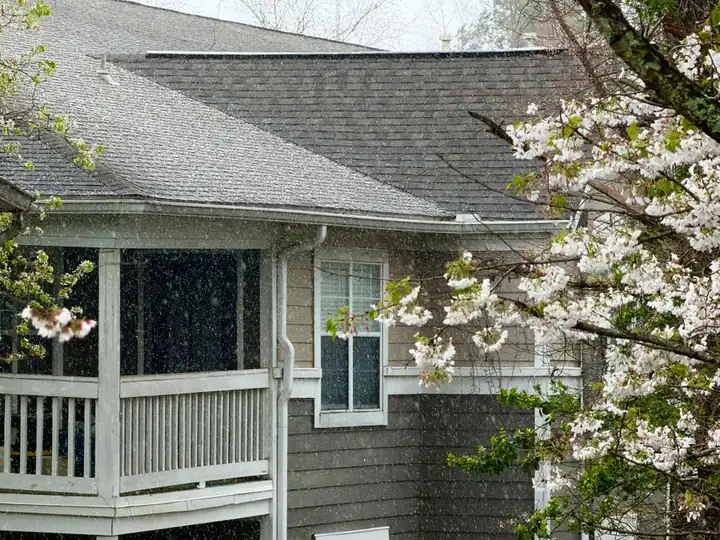
Your roof is leaking after heavy California rain because water is getting past a failed flashing joint, a clogged or broken drainage path, or a breach in the roof covering that only shows up under sustained runoff. The leak is rarely the shingle you can see from the ground - it is almost always at a penetration, a valley, or a seam that has been quietly degrading for months. This post walks through the exact causes we find on California roofs after atmospheric river storms, how to stop the water right now, what repairs cost in 2026, and when to bring in a professional.
Why does my roof leak after heavy rain in California?
California roofs are built for sun, not for the 4-to-8 inches of rain that can fall in a single atmospheric river event. The state's dry climate lets small vulnerabilities sit dormant for years - a lifted shingle, a hairline crack in a pipe boot, a pinch of debris in a valley - and then a storm dumps weeks of rain in 48 hours and pushes water into places it has never been. The leak is not new. The rain just found it.
We see this pattern every wet season across Roofing in Los Angeles, where older Spanish tile and low-slope roofs dominate. Tile roofs shed water beautifully until a single cracked tile or a failed underlayment seam lets water run straight down the deck. Flat and low-slope roofs pond water at drains and scuppers, and that standing water finds every weak point in the membrane. The storm does not create the leak. It reveals it.
The most common causes of roof leaks after California storms
After a heavy rain event, our technicians find the same handful of failure points over and over. Here are the ones that account for the vast majority of California rain roof leaks we repair.
Flashing failures at walls, chimneys, and skylights
Flashing is the metal that seals the joints where your roof meets a vertical surface. It takes the brunt of wind-driven rain. When the sealant behind step flashing dries out - which happens faster in California's UV-heavy climate - water gets behind the metal and runs down the wall framing. A leak that shows up on a ceiling near a chimney or skylight is almost always flashing, not the field of the roof.
Clogged valleys, drains, and scuppers
Water that cannot drain goes sideways. A valley packed with pine needles, a flat roof drain blocked by leaves, or a scupper that has been painted over will pond water until it backs up under the roof covering. On flat roofs, we routinely find 1 to 2 inches of standing water after a storm because a single drain was blocked. That water weighs about 5 pounds per square foot and finds every seam.
Worn or lifted shingles and tile
Asphalt shingles lose their sealant strips after 12 to 18 years of California sun. Wind-driven rain from a storm peels back the lifted edge and water wicks underneath. Clay and concrete tile crack from thermal cycling, and a single broken tile exposes the underlayment. If your roof is 15 years or older and you have never had it inspected, this is the first place we look.
Failed pipe boots and vent seals
Every plumbing vent and exhaust pipe that penetrates your roof has a rubber boot or lead collar around it. That rubber dries, cracks, and shrinks in the heat. By the time a storm arrives, the boot is no longer sealing. A leak that appears directly below a vent pipe is a pipe boot failure nine times out of ten.
Damaged underlayment and decking
Underlayment is the secondary water barrier beneath your roof covering. Once it tears or ages out, water that gets past the top layer goes straight into the attic. We find rotted decking on roughly one in four leak repairs after a heavy storm season - the leak has been running for a while, and the wood finally gave out.
How to stop a roof leak during California rain
You can slow or stop an active leak during a storm without climbing on a wet roof. The goal is to move water away from the leak and contain the damage until the weather clears.
- Find the source from inside. Go into the attic with a flashlight and look for water staining on the rafters and decking. That tells you roughly where the breach is - often 3 to 6 feet uphill from where the ceiling stain appears.
- Contain the water. Put a bucket under the drip and lay plastic sheeting on the floor. If the ceiling is bulging, poke a small hole in the center of the bulge to let water drain in a controlled way instead of collapsing.
- Clear what you can safely reach. From the ground, use a rake or a leaf blower to clear debris from valleys and low roof edges. Never walk on a wet roof.
- Call for emergency help. If water is pouring in, you need Emergency Roofing Services in California. Our team can tarp the roof and stop the water before it reaches drywall, insulation, and electrical.
Do not seal the leak from inside with spray foam or caulk. That traps moisture in the deck and accelerates rot. The fix has to happen on the roof side.
Does homeowners insurance cover rain roof leaks in California?
Homeowners insurance in California typically covers a sudden, accidental breach - a wind event that tears off shingles, a fallen branch that punches a hole, or a storm that lifts flashing. It usually does not cover a leak that developed slowly from wear, age, or deferred maintenance. The adjuster's first question is always whether the damage was sudden or gradual.
If you can show that a single storm caused the breach, you have a strong claim. If the leak has been staining the ceiling for months, the insurer will call it maintenance. We document the cause with photos and a written report so you have what you need when you file. For the repair itself, most California homeowners pay out of pocket for Roof Leak Repair in California, which runs $350 to $1,200 for a standard flashing or pipe boot fix in 2026, and $1,500 to $4,500 when decking or multiple areas are involved.
What to watch out for: mistakes that make leaks worse
The wrong response to a roof leak costs more than the leak itself. These are the mistakes we see homeowners make after every big storm.
- Climbing on a wet roof. Tile and shingles are slick when wet, and a fall is far more expensive than any repair. Stay off the roof during rain.
- Patching from the inside. Caulk, foam, and flex seal applied to the ceiling trap moisture and hide the real problem. The leak keeps running and the deck keeps rotting.
- Hiring the first person who knocks. After a storm, out-of-area crews canvass neighborhoods. Ask for a California contractor license, a local address, and a written scope before anyone touches your roof.
- Ignoring a small stain. A 6-inch ceiling stain after one storm can mean 20 square feet of wet insulation and a $2,000 repair if you wait until the next rainy season.
- Assuming the roof is fine because it is new. Even a 3-year-old roof can leak at a pipe boot or a valley if debris was left behind. New roofs fail at the penetrations first.
When to call a professional
Call a professional when water is actively entering the house, when the leak returns after every storm, or when you cannot find the source from the attic. Those three situations almost always mean the breach is at a flashing joint, a valley, or under the roof covering - places that require roof access and the right materials to fix correctly.
We handle this every day. Our team finds the leak, fixes it, and tests the repair with a hose before we leave. If your roof is older and this is the third or fourth leak in two years, we will tell you honestly whether a repair still makes sense or whether it is time to plan for Roof Replacement in California. We also offer a full Roof Inspection in California that documents every vulnerable point before the next storm season, so you are not chasing leaks one at a time.
Frequently Asked Questions
Why does my roof leak after heavy rain in California?
Your roof leaks because heavy rain finds a pre-existing weakness - failed flashing, a cracked pipe boot, clogged drainage, or worn shingles. California's dry climate lets these issues sit unnoticed for months, then a single atmospheric river pushes water through. The leak is old; the storm just exposed it.
How to stop a roof leak during California rain?
Stay off the roof. From inside, contain the water with buckets and plastic, and clear debris from valleys only if you can reach it safely from the ground. Call an emergency roofer to tarp the area. Temporary fixes from inside, like caulk or foam, trap moisture and make the damage worse.
Does homeowners insurance cover rain roof leaks in California?
Insurance covers sudden storm damage - wind-lifted shingles, fallen branches, or a single event that breaches the roof. It typically excludes leaks from age, wear, or deferred maintenance. Document the cause with photos and a written report. Most standard leak repairs in California cost $350 to $1,200 out of pocket.
Who to call for roof leak after California storm?
Call a licensed California roofing contractor that offers emergency service. You want a local company that can tarp the roof the same day, document the cause for insurance, and return to make a permanent repair. RoofPros California handles emergency leak calls across Los Angeles and the San Fernando Valley.
How much does roof leak repair cost in California in 2026?
Most single-point repairs - flashing, pipe boot, or a small shingle section - run $350 to $1,200 in 2026. If the leak has damaged decking or involves multiple areas, expect $1,500 to $4,500. Emergency tarping typically adds $250 to $600, which is often credited toward the permanent repair.
Get help with Roofing in California
If your roof is leaking after heavy California rain, we can stop the water today and fix the cause before the next storm. RoofPros California serves homeowners across Los Angeles and the San Fernando Valley with same-day emergency response and honest, upfront pricing. Call us at (877) 409-4846 and we will get your roof dry.